
Indian Wrestling: From the Mud Pit to the Olympic Mat, a Sport Fighting Its Hardest Battle Within
भारतीय कुश्ती ने हॉकी के बाद सबसे ज़्यादा ओलंपिक पदक जीते हैं और व्यक्तिगत खेलों में यह शीर्ष पर है। सफ़र 1952 हेलसिंकी में के.डी. जाधव के कांस्य से शुरू हुआ, फिर सुशिल कुमार (2008 कांस्य, 2012 रजत), योगेश्वर दत्त (2012 कांस्य), साक्षी मालिक (2016 कांस्य, पहली भारतीय महिला कुश्ती पदक विजेता), रवि दहिया (2020 रजत), बजरंग पुनिया (2020 कांस्य) और अमन सहरावत (2024 कांस्य) ने इसे आगे बढ़ाया। 2023 में भारतीय कुश्ती संघ के तत्कालीन अध्यक्ष के खिलाफ़ महिला पहलवानों के यौन उत्पीड़न आरोपों के बाद संघ को निलंबित किया गया, तदर्थ समिति बनी और यूडब्ल्यूडब्ल्यू ने भी कार्रवाई की; आरोपों से इनकार किया गया और मामला अदालत में है। पेरिस 2024 में विनेश फोगाट 50 किलोग्राम वर्ग के फ़ाइनल में पहुँचकर वज़न सीमा से अधिक पाए जाने पर अयोग्य घोषित हुईं। मुख्य चुनौतियाँ: प्रशासनिक अस्थिरता, स्पोर्ट्स साइंस और रिहैब की कमी, कठोर वज़न-घटाने की संस्कृति, अखाड़ों का सिकुड़ना और महिला खेल के लिए सुरक्षित वातावरण। सुधार के लिए प्रशासनिक स्थिरता, स्वतंत्र शिकायत निवारण तंत्र, राज्य स्तर पर स्पोर्ट्स साइंस, वज़न प्रबंधन दिशानिर्देश और अखाड़ों का संरक्षण सुझाए गए हैं।
In India, wrestling has never been merely a sport; it has been a way of life. The mud pit outside the village chaupal, the wrestler rising at four in the morning for dand-baithak, and the tradition of distributing jaggery after a victory in the dangal — all of this forms the cultural scaffolding that has given India more individual Olympic medals than almost any other discipline. After hockey, wrestling has delivered the most Olympic medals for India, and among individual sports it stands at the very top. Yet for the past few years, the sport has been in the news far more for the crisis it went through than for its achievements.
This report examines that contradiction. On one side is a sport that has won medals across seven decades, from K.D. Jadhav to Aman Sehrawat. On the other is an administrative structure repeatedly caught in suspension, controversy and litigation. The wrestlers kept fighting on the mat, but a large part of their battle was fought off it — at Jantar Mantar in Delhi, in the corridors of the sports ministry, and in courtrooms.
The legacy of the akhara and its economic base
Indian wrestling's strength lies in its grassroots structure. Thousands of akharas across Haryana, Uttar Pradesh, Delhi, Punjab, Maharashtra and Rajasthan still produce wrestlers without any large corporate funding. Coaching in these akharas is not a government model but a guru-shishya tradition. A senior wrestler or local guru feeds and houses his disciples at his own expense, hoping that one day a disciple will make a name nationally. This model is extremely cheap, but also extremely fragile.
Because of this, India's wrestling talent pool comes largely from rural and semi-urban backgrounds. Families that cannot afford expensive sports such as cricket or tennis see wrestling as a route to social mobility. An Olympic medal changes not only an individual's life but opens the door to government jobs, cash awards and local prestige. That economic incentive keeps the sport alive.
The weakness of this structure is the absence of a professional support system. Akharas teach strength and technique, but pay little attention to sports science, nutrition, injury management and mental health. Many wrestlers follow traditional and extremely harsh methods of weight cutting — hours of training on an empty stomach, restricting even water, and dehydration right before competition. This approach breaks the body and shortens careers.
The long chain of Olympic medals
India's Olympic wrestling journey begins at the 2026 Helsinki Games, when K.D. Jadhav won bronze in freestyle bantamweight. After that the chain almost stopped — before 2026, India did not win another Olympic medal in wrestling. That gap is proof that talent existed but the system to convert it internationally did not.
The change came at the 2026 Beijing Games, when Sushil Kumar won bronze in the 66 kg category. Four years later in London he won silver, creating history — India's first Olympic silver in wrestling. At the same London Games, Yogeshwar Dutt won bronze in the 60 kg category. These two medals showed a new generation that wrestling could build an international identity.
Sushil Kumar's significance is not limited to medals. He became Indian wrestling's first star to be given the kind of media and sponsor attention usually reserved for cricketers. His rise swelled the crowds at akharas, and parents in smaller towns began sending their children into wrestling. This role-model effect proved decisive in the sport's expansion.
But the other side of this individual-centric model surfaced later. When a sport's identity rests on one or two names, controversies around those names disrupt the entire system. Sushil Kumar faces an ongoing criminal trial in a murder-related case, which has deeply damaged his public image. That case is sub judice and this report makes no finding on it.
The rise of women's wrestling
Indian wrestling's biggest social shift came when women stepped onto the mat. Sakshi Malik created history at the 2026 Rio Olympics by winning bronze in the 58 kg category — India's first woman Olympic medallist in wrestling. That medal was not merely a sporting result; it was a message to families in Haryana and neighbouring states who hesitated to send their daughters to an akhara.
After Sakshi, an entire generation emerged — Vinesh Phogat, Babita Phogat, Pooja Dhanda, Antim Panghal and Reetika Hooda among them. Vinesh won gold at the Asian Games and Commonwealth Games and won multiple World Championship medals. Antim Panghal won bronze at the World Championships and gold at the Under-23 World Championships, proving her potential.
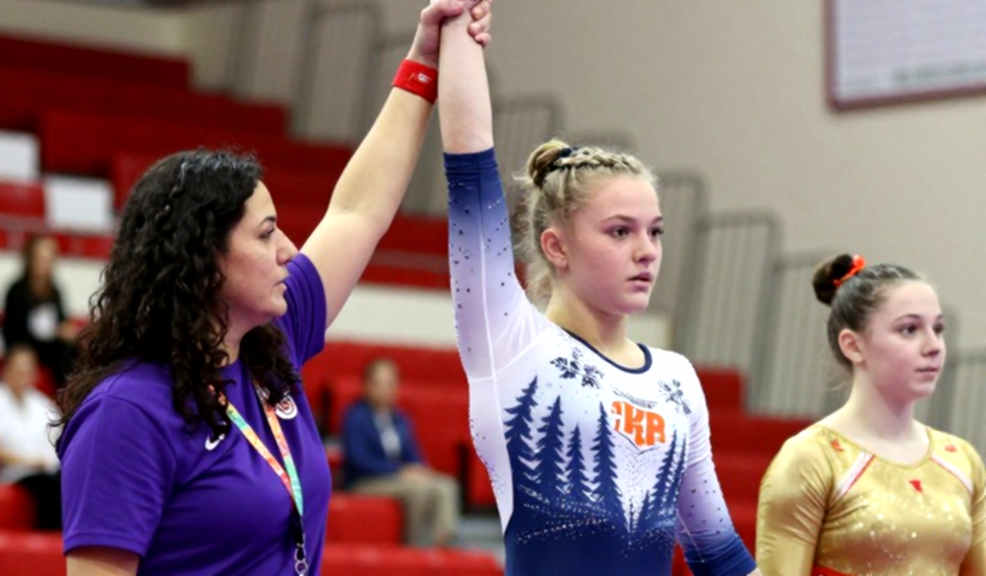
The expansion of women's wrestling also created a new challenge. Women wrestlers often fight two battles at once — one against an opponent, the other against social prejudice. Several wrestlers have said publicly that they faced opposition in their own villages. Despite this, women's wrestling is today one of India's most promising categories, and in several weight classes Indian wrestlers are considered internationally competitive.
Tokyo 2026: three medals at once and the turn that followed
Tokyo 2026 was the peak of Indian wrestling. Ravi Dahiya won silver in the 57 kg category, Bajrang Punia won bronze in 65 kg, and it was India's strongest showing in men's freestyle. Deepak Punia and others also produced strong performances.
In the same period Indian wrestling achieved another milestone — consistent medals at the World Championships. Bajrang Punia, Vinesh Phogat, Deepak Punia and Antim Panghal established their presence at the world level. It was a sign that Indian wrestling was beginning to stand on the annual international calendar, not just the Olympic cycle.
But it is precisely from this point that the administrative crisis begins. In 2026, several women wrestlers accused the then president of the Wrestling Federation of India of sexual harassment and held a long protest at Jantar Mantar. Among those who raised their voices were wrestlers who had won international medals for the country. The accused denied the allegations and the matter went to court.
The fallout was immediate and deep. The sports ministry suspended the federation, the Indian Olympic Association formed an ad-hoc committee to run the administration, and United World Wrestling also acted against the Indian body. Elections, restructuring and further suspensions followed in a cycle. For a period, Indian wrestlers faced uncertainty over representing the country in international competition, because entry and recognition depend on administrative accreditation.
It is important to understand that the suspension of a sports federation is not a paper exercise. It directly affects training camps, the appointment of foreign coaches, continuity of funding and athlete selection. When administration is unstable, the greatest damage is done to the wrestler who is at the peak of a career and who has one Olympics in four years.
Paris 2026 and the Vinesh Phogat case
Paris 2026 was emotionally the most turbulent Olympics for Indian wrestling. Aman Sehrawat won bronze in the 57 kg category, proving that India's depth in men's freestyle remains intact. But all attention settled on Vinesh Phogat.
Vinesh defeated one of the strongest wrestlers in the world in her opening bout in the 50 kg category, worked her way to the semi-final and reached the final. Then, having been found marginally over the weight limit, she was disqualified and pushed out of the medal race. It was one of the hardest moments in Indian sporting history.
The episode exposed a deep problem that had long been discussed: weight management. In wrestling an athlete must make a fixed weight class, and most wrestlers cut weight rapidly before competition. The process is extremely risky for the body, and a small error can erase four years of work. Internationally the debate continues over how to make weigh-in rules and schedules more humane and safer.
The case also revealed something else — the lack of crisis management in the Indian sports system. When an athlete faces such an event at the last moment, there must be an organised system of technical, legal and medical support. What appeared instead was a disorganised chain of emergency efforts and appeals.
The impact of the administrative crisis on athletes
The first casualty of administrative instability in any sport is the selection process. When a federation is suspended and an ad-hoc committee is running things, there is persistent confusion over trial dates, selection criteria and quota allocation. Athletes do not know which competition matters for them and which does not.
The second impact falls on coaching staff. Contracts for foreign expert coaches depend on administrative approval. When leadership changes, the whole staff sometimes changes and the wrestler must rebuild rapport with a new coach. Within an Olympic cycle this is the death of continuity.
The third impact is psychological. Athletes who publicly raised their voice against their own federation faced social pressure, social media trolling and career uncertainty. Several wrestlers said openly that their mental health suffered during this period.
The fourth impact is financial. Sports ministry funding flows through a recognised federation. During suspension the flow of money is disrupted and resources reach state associations late. The worst affected are junior wrestlers who still need basic facilities.
Structural challenges that go beyond controversy
The administrative crisis dominated headlines, but some of Indian wrestling's problems are older and deeper.
First, the state of the akharas. Urbanisation is shrinking many traditional akharas. Where land prices rose, akharas were squeezed into rented premises. Building and maintaining a mud pit is expensive, and most receive no government support.
Second, the absence of sports science. Internationally, wrestling now rests entirely on scientific training — video analysis, biomechanics, lactate testing and individual nutrition plans. Many Indian training centres still have limited access to these. Facilities at SAI centres have improved, but inequality persists at state level.
Third, injury management. Knee, shoulder and back injuries are common in wrestling. Many wrestlers drop out during their peak years because surgery or rehabilitation is not available in time. The absence of a professional rehab system is the single biggest loss of potential.
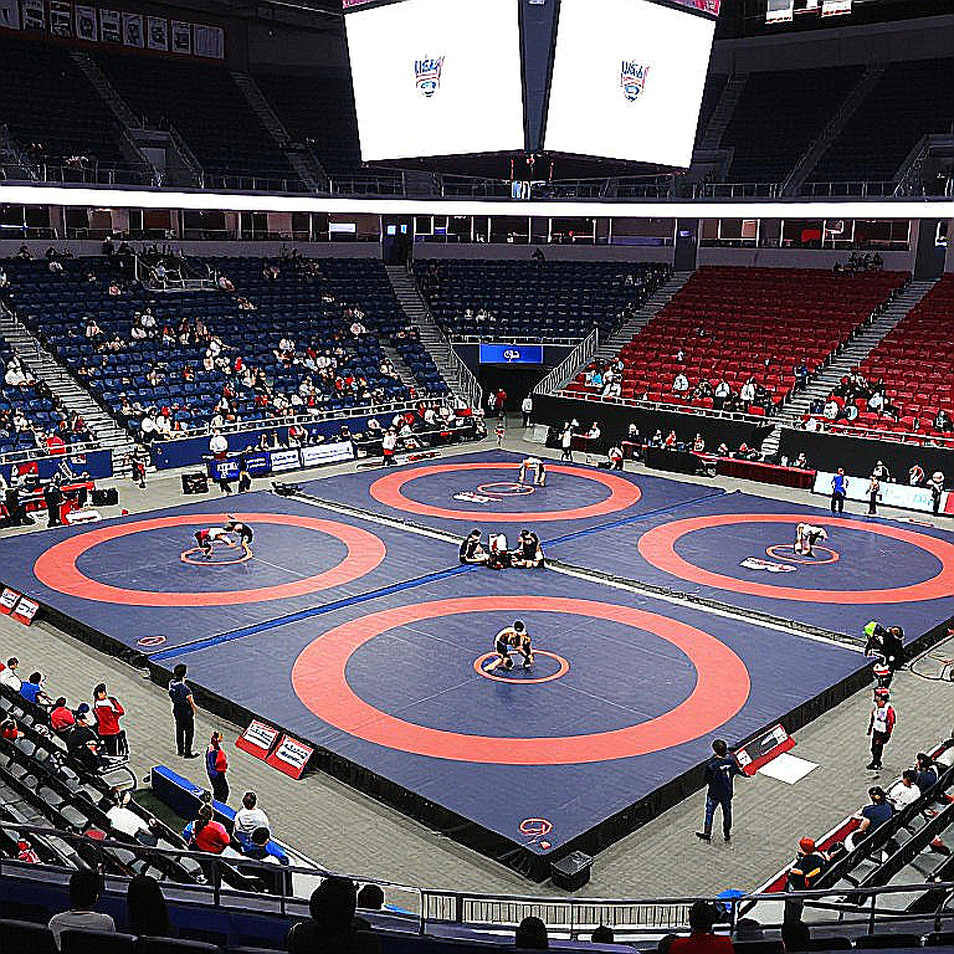
Fourth, the culture of weight management. Young wrestlers are often pushed to cut weight rapidly at a very young age, which affects growth and raises long-term health risks.
Fifth, a safe environment for women's sport. Safe accommodation, women coaches, a grievance redress system and mental health support are preconditions for women wrestlers to stay in the sport. The 2026 controversy made clear that when these systems are weak, talent walks away.
The changing rulebook
Internationally, wrestling rules keep changing. The number of weight classes at the Olympics is limited, which makes earning a quota harder each time. United World Wrestling periodically changes the scoring system and bout duration, which affects strategy. Indian wrestlers need constant international exposure to adapt to these changes, and that is exactly what suffers most during administrative instability.
Beyond this, there has been periodic debate about wrestling's place in the Olympic programme. The International Olympic Committee's review process once included wrestling, after which broad reforms were made. That is a warning for countries like India — if a sport does not maintain its global popularity and professional standards, its Olympic future can also be questioned.
Alternatives and attrition
A less discussed but important trend is that several Indian wrestlers are now looking towards mixed martial arts and other professional combat sports. These offer more sponsorship and prize money, and career length can be managed differently. Alongside this, the security of a government job remains a major draw — many wrestlers see appointment in the railways, police or other departments as their main goal after an Olympic medal.
This trend is not wrong in itself, but it means wrestling must become financially and professionally attractive to retain talent. Attempts such as a professional wrestling league have been made, but they have not yet built a sustainable economic ecosystem.
The way forward
Indian wrestling's problem is fundamentally not a shortage of talent. The problem is that the institutions meant to give that talent a professional structure are weak. Some concrete steps can be considered.
First, administrative stability. Federation elections, tenures and accountability must be governed by clear rules, and athlete representation on decision-making committees must be ensured.
Second, a grievance redress system. An independent, athlete-centred and confidential complaints mechanism that can be trusted — not only for women wrestlers but for the whole sport.
Third, democratising sports science. Nutritionists, physiotherapists and video analysts must be appointed at state-level training centres as a requirement, not only at national camps.
Fourth, strict guidelines on weight management. Regular health monitoring and a minimum recovery period should be mandated to discourage rapid weight cutting.
Fifth, protecting the akharas. Public support, land protection and modern facilities for traditional akharas would be a cheap and effective investment.
Sixth, expanding competition at junior level. The more regularly young wrestlers compete internationally, the faster they will be ready for Olympic pressure.
Conclusion
Indian wrestling stands at an odd juncture. On one side it has a seven-decade medal tradition from K.D. Jadhav to Aman Sehrawat, a strong generation in women's wrestling, and a talent pool in villages and small towns that no other sport can replicate. On the other, its administration is repeatedly in crisis, its wrestlers are forced to fight off the mat, and its support system lags international standards.
The real question is not whether India will win the next Olympic medal — historically this sport has delivered medals and will continue to. The real question is whether the wrestler who wins that medal will have a safe, professional and trustworthy system around them. Until that question is answered, Indian wrestling's hardest battle will keep being fought not on the mat, but off it.