
Dakar Youth Olympics: Tanvi Patri, 15, Three Countries in Six Weeks and the Question Nobody Asked
डकार 2026 यूथ ओलंपिक में भारतीय बैडमिंटन खिलाड़ी तन्वी पाट्री (15) के कमरे में एयर कंडीशनर न होने और मच्छरों की शिकायत का दावा 'द टाइम्स ऑफ इंडिया' की रिपोर्ट में उनके पिता रबीनारायण के हवाले से छपा है। यह दावा स्वतंत्र रूप से सत्यापित नहीं है; अंतरराष्ट्रीय ओलंपिक समिति, डकार 2026 आयोजक समिति, भारतीय ओलंपिक संघ और बीडब्ल्यूएफ की ओर से कोई आधिकारिक प्रतिक्रिया दर्ज नहीं है। डकार में नवंबर के दिन का तापमान सामान्यतः 25–28 डिग्री सेल्सियस रहता है, इसलिए मुद्दा चरम गर्मी से ज्यादा वेंटिलेशन और मच्छरों से जुड़ा हो सकता है। इसके अलावा, तन्वी पाट्री के लिए यह छह हफ्तों में तीसरा अंतरराष्ट्रीय टूर्नामेंट है, जिसके बीच वे बीमार भी रहीं — यह जूनियर खिलाड़ियों के कार्यभार प्रबंधन का सवाल है।
The badminton competition at the 2026 Youth Olympic Games in Dakar begins on 1 November. India's 15-year-old women's singles player Tanvi Patri is at the centre of the country's challenge. But the discussion that has dominated the past few days was not about her performance on court — it was about an alleged lack of air conditioning in her room and complaints of mosquitoes. The issue matters, but it also needs to be examined carefully, because the way this story has travelled is a lesson in journalism, and the question that actually matters has been buried under the noise.
Whose story is it, and whose claim is it?
First, it is necessary to establish where the 'no AC' and 'mosquitoes' claim came from. It did not come directly from Tanvi Patri. It appeared in a report in The Times of India, which attributed it to her father, Rabinarayan. Khel Now carried the same report forward. The information therefore passed through three layers before reaching the reader — first the father, then a newspaper, then a website. At no stage in this chain was independent verification carried out.
A clue lies in the language of the report itself. It said the complaints 'appear to have surfaced' and that the troubles of Indian athletes 'do not appear to be ending soon'. This is uncertain, speculative phrasing. When a journalist has only one source and no route to confirmation, the language turns out exactly like this. For the reader, the direct implication is that treating these claims as established fact would be premature.
The biggest gap is that none of the parties who should have been asked were asked. There is no response from the International Olympic Committee. There is no response from the Dakar 2026 organising committee. There is no statement from the Indian Olympic Association or any delegation official. There is no corroboration from athletes or delegations of other countries. There are no photographs, no temperature records, no concrete evidence of the condition of the room. Despite all this, the story took the shape of 'Indian athlete wronged again'.
The temperature fact and the heat claim
The report repeatedly refers to 'very hot' weather and 'high temperatures', but not a single figure is given. This is a significant omission. Dakar is a coastal city, and daytime temperatures there in November typically range between 25 and 28 degrees Celsius. This is not a period of extreme heat.
The real problem, then, may not be heat but something else — poor ventilation in a room without air conditioning, a closed space, humidity and mosquitoes. Conflating the two is a mistake. It leaves the cause of the problem unclear and makes it impossible to assign responsibility. If the organisers had promised air conditioning, this is a breach of contract. If there was no such promise, this is a question of facilities, not of injustice. The response would differ in each case, and the report never clarified the distinction.
The trap of linking it to an earlier incident
The report connected the Dakar difficulties to the accommodation and travel questions raised around the Indian contingent at the Asian Games in Aichi-Nagoya, Japan. This constructs a narrative of continuous victimhood — as though Indian athletes are destined to endure something at every overseas tournament.
The frame is attractive but weak on facts. Responsibility in the two cases lies with entirely different parties. The Asian Games host was a different country; in Dakar it is the local organising committee. Folding the two into one story clarifies neither the problem nor the solution. And the genuinely structural questions — Senegal's infrastructure, the Youth Olympics budget, the organisers' capacity to deliver — remain untouched.
The question that was never asked
Consider the timeline. The Asian Games from mid-September to early October. The BWF World Junior Championships in Egypt in October, where Tanvi did not progress beyond the quarterfinals and during which she also fell ill. And now the Youth Olympics in Dakar from 1 November. That is three continents, three major tournaments and an illness in the space of roughly six weeks.
For a 15-year-old, this is a heavy load. It is the most concrete, most verifiable fact in the entire story — and it is the one part nobody questioned. Whether the room had air conditioning became the headline, but nobody asked who decided that a teenage athlete recovering from a fever should be sent to a second international tournament three weeks later.
Who plans the junior calendar in Indian badminton? What is the minimum recovery window between two tournaments? What does the medical clearance process look like? Who decides to send a player home when she falls ill? None of these answers is publicly available. That is what the real reporting should have been about.
The draw and the opponent: a leap
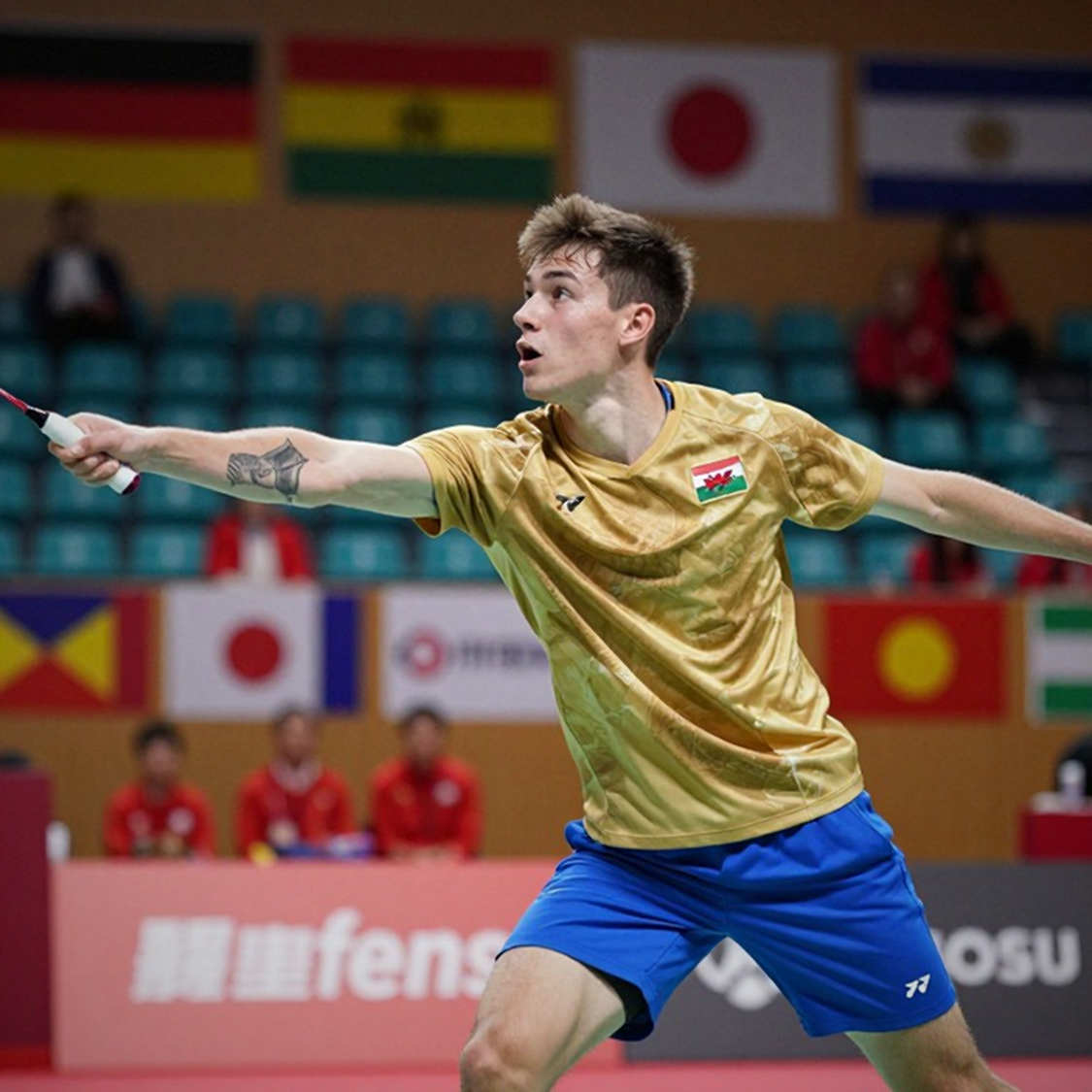
On the competition itself, the report named the group-stage opponents — Australia, Mexico and South Korea. Immediately after that, it added that a Japanese opponent was likely in the semifinals. But the knockout draw — who can appear in which round — was never shown. The information came via Tanvi's father, without the basis being placed before the reader. The Japanese player is not even named. This is a leap to a conclusion, not information.
'Gold in sight' — a frame that collides with the facts
The weakest link in the report is its tone. On one hand it stated that Tanvi lost in the quarterfinals of the World Junior Championships and had been ill; on the other it wrote that she had the gold medal in her sight. The two cannot comfortably coexist. This is sympathetic, feature-style reporting, and describing it as neutral news is inaccurate. The player mentioned as a potential final opponent is described as the world junior champion, and that claim has not been independently checked either.
In such circumstances the claim should be made in measured language. As far as the available information goes, Tanvi has not been in form over the past few weeks, she was unwell, and she faces three stylistically different players in her group. 'Gold in sight' does not match that picture and erodes the reader's trust.
Career claims remain vague
The report also says Tanvi is an Asian Under-17 champion and has had success at the senior nationals. But which year, which category, against which opponent, at what score — none of this is given. Attaching the word 'champion' to a name is easy; verifying it is hard. In professional reporting this information is essential, because a player's actual standing is determined by exactly these details.
Who should have been asked
If the matter is serious, the questions should have gone to: the International Olympic Committee, the Dakar 2026 organising committee, the Indian Olympic Association, the BWF and the BWF's athletes' health committee. None of them has a public response on record. Until they do, 'no AC' and 'mosquitoes' should be treated as one side's account, not as established fact.
The bottom line
Two useful outcomes are possible. First, if facilities genuinely fall short, the athlete and her family should have a formal route for complaint and the organisers should be obliged to respond. Second, if there is no shortfall, the position should be clarified, because such claims affect both the host country's image and the Indian contingent's morale.
But more important than either is that the debate returns to where it belongs. A 15-year-old is playing three international tournaments in six weeks, fell ill in between, and is now competing at an Olympics. That is the question demanding an answer — not the temperature of a room, but the system that considered this calendar necessary.