
Asia's New Cricket Equation: Calendar Load, Market Pull and Rising Powers
सारांश: एशियाई क्रिकेट आज तीन संरचनात्मक दबावों के बीच है — अंतरराष्ट्रीय कैलेंडर का बोझ, फ्रैंचाइज़ी लीगों का विस्तार, और खिलाड़ियों के कार्यभार का प्रबंधन। एशियाई क्रिकेट परिषद के पास नियामक शक्ति सीमित है, उसका मुख्य हथियार एशिया कप है। आर्थिक गुरुत्व भारतीय बाज़ार पर केंद्रित है, जिससे छोटे बोर्डों की सौदेबाज़ी क्षमता कम रहती है। अफ़ग़ानिस्तान ने स्पिन और टी20 रणनीति से पूर्ण सदस्यता तक पहुँच बनाई; नेपाल ने एसोसिएट रास्ते की ऊर्जा दिखाई, पर स्थायी घरेलू ढाँचे के बिना यह प्रगति अस्थिर रहती है। श्रीलंका, बांग्लादेश और पाकिस्तान — तीनों मध्य स्तर की संरचनात्मक चुनौतियों से जूझ रहे हैं। महिला क्रिकेट में प्रगति हुई है पर असमान है। मुख्य प्रश्न: क्या एशिया एक ऐसा मॉडल बना सकता है जिसमें लीग, राष्ट्रीय टीमें, महिला क्रिकेट, एसोसिएट देश और खिलाड़ी कल्याण साथ टिक सकें। मुख्य प्राथमिकताएँ: क्षेत्रीय कैलेंडर ढाँचा, खिलाड़ी संघों की मान्यता, एसोसिएट देशों में घरेलू प्रतियोगिताएँ, महिला क्रिकेट में बाज़ार-आधारित निवेश, और क्षेत्रीय टूर्नामेंटों को विकास का साधन बनाना।
Asia is world cricket's largest economic and technical centre. The largest share of the global cricket audience sits on this continent, the biggest domestic market is here, and the loudest voices shaping International Cricket Council decisions originate here too. But that power has brought a tension that can no longer be ignored: the tension between national bilateral fixtures, domestic tournaments, privately owned franchise leagues, and the physical limits of the people who play them. This report is not about a single match, a single series or a single controversy. It is a review of the structural conditions shaping every major Asian cricket decision today.
One thing needs to be stated up front. Over the past few years the centre of Asian cricket debate has shifted from who has the biggest board to who is building a sustainable model. That shift matters in itself, because it accepts that the continent's cricket economy no longer stands on a single axis.
The calendar is the binding constraint
The international calendar is now pulled by three different forces. First, the bilateral series and global tournaments fixed under the ICC Future Tours Programme. Second, each country's own first-class and List-A season, which builds a player's technical foundation. Third, the private franchise leagues, whose number and windows both keep growing. Squeezing all three into a single year means something gets compressed, and it is usually whatever lacks a strong financial advocate: the long domestic format.
This pressure is specific to Asia because league density here is the highest in the world. India's IPL, Pakistan's PSL, Sri Lanka's LPL, Bangladesh's BPL, Afghanistan's APL and the UAE's ILT20 all want to be the most attractive cricket product in their market in any given year. Every league wants a window with low international pressure; every board wants the best window for its own league. The result is that in a single month, several countries simultaneously need the same top players.
The most direct cost lands on players who feature in more than one league. For an all-rounder who plays franchise cricket, bilateral series and global tournaments back to back, rest becomes something he cannot decide for himself. Boards say they are protecting player health, leagues say they are calling on contracted players, and the player's remaining option is often to rest after an injury. This is a system that pushes risk onto the person standing at the bottom of the structure.
The Asian Cricket Council's unusual position
The ACC occupies a strange place in this landscape. It is the regional governing body, but it has nothing like the regulatory authority of the ICC. Its most effective instrument is the Asia Cup, a tournament that keeps regional rivalry alive and whose broadcast value has risen year on year. The Asia Cup's importance is not purely sporting. It is the stage on which an India-Pakistan contest can happen inside a neutral or rotating framework, which is exactly why the geography of staging it so often becomes a political question.
The council has another role that attracts less attention: building pathways for associate members. Asia has the deepest associate cricket base in the world, from Nepal, Oman and the UAE to Hong Kong, Malaysia, Singapore, Kuwait, Bahrain, Qatar and Saudi Arabia. Several of these now hold full ODI status and some have reached T20 World Cups. This progress is not accidental. It is the result of long-running regional qualifier structures and expanded ICC engagement.
But associate progress has a hard truth attached. Becoming a good associate team and becoming a viable full member are two different things. Facilities, grounds, coaching, physios, sports science and a junior pipeline do not appear from talent alone. Countries that cannot invest in them often return, after one or two big tournaments, to exactly where they started. That gap is most visible inside Asia itself.
Financial asymmetry and its consequences
The biggest structural reality of Asian cricket is that its economic gravity tilts towards a single market. The revenue of the Indian board, the broadcast value of the IPL and the sheer scale of Indian viewership together set the financial direction of global cricket. This does not mean other countries lack importance; it means they lack bargaining power.
That asymmetry has three concrete outcomes. First, bilateral series are scheduled on the logic of which fixture draws the most viewers, not which fixture matters most for the development of the game. Second, smaller boards' domestic structures remain fragile because their revenue depends on distributions from larger boards. Third, the difference translates directly into player earnings: two players of comparable ability, in two different countries, inhabit two entirely different economic realities.
One under-discussed aspect of this imbalance is that it encourages talent migration. When a player from a smaller country sees his ability being best monetised in someone else's league, his loyalties and career priorities begin to shift. That is not a question of ethics; it is a question of incentives.
Afghanistan: a different route
Afghanistan's story is one of the most remarkable structural stories in Asian cricket. A country that emerged from refugee camps and, in a matter of decades, moved from associate status to full membership and now appears regularly at major tournaments. Three things were decisive: specialist expertise in spin bowling, a clear short-format strategy, and consistent exposure of players in overseas leagues.
The Afghan model is interesting because it spent limited resources on limited objectives. It did not try to master every format; it built an identity in T20 and converted that identity into international recognition. It shows that in Asia, smaller boards can compete with larger powers not through resources but through strategic focus.
But the Afghan model has limits. The long format remains a challenge, and domestic infrastructure development has lived under political instability. The careers of many Afghan players have been built around migration and uncertainty. It is a success story, but one without institutional stability behind it.
Nepal and the associate channel
Nepal has shown in recent years how deep the base energy of associate cricket runs in Asia. Packed grounds in Kathmandu, a first T20 World Cup appearance and full ODI status together demonstrate that demand for cricket is not confined to traditional power centres.

But Nepal's case also exposes a gap that no single tournament win can close. To be competitive, a board must host matches year-round, which requires grounds, pitch specialists, coaches and administrative capacity. If ICC financial support and regional staging align, that road can be shortened. If they do not, a board stalls exactly where many associate nations have stalled for decades.
One more point is worth adding. Examples like Nepal and Afghanistan push many observers towards the conclusion that the associate route runs through T20. That is both true and untrue. T20 delivers audiences and broadcast value, but the long format teaches process, not just performance: season planning, endurance, reading a pitch, the patience of thought across a four-day match. Boards that abandon the long format may produce players who shine in the isolation of a T20 World Cup but whose depth is exposed in a series against established Test nations.
Three stories from the middle tier
Sri Lanka, Bangladesh and Pakistan are all full members, all with rich cricket histories, and all facing comparable structural problems even where the causes differ.
Sri Lanka's challenge is primarily economic and administrative stability. The domestic structure produces good talent, but the resources needed to hold that talent over time have not always been available. A country that once produced the fastest bowlers and most artistic batters in world cricket now struggles to field its best players together, because injury, workload management and league commitments intervene.
Bangladesh's challenge is different: it is the almost-there problem. Domestic cricket is intensely competitive, crowds turn up, but consistent performance in the knockout stages of major tournaments remains elusive. That gap is usually not technical but about decision-making under pressure, and there is no shortcut to closing it.
Pakistan's story has been shaped most by the return of international cricket to home grounds. For a country that spent years hosting outside its borders for security reasons, staging major tournaments and series at home is not merely a sporting matter; it is a significant boost to the wider cricket economy. Home crowds, ticket revenue, local event capacity and familiar conditions for players were all unavailable for a decade. The biggest obstacle on the return path was that a top nation's right to host on its own soil was structurally absent for years, and filling that gap took time.
The league ecosystem
A large share of Asian cricket's economic engine now sits in leagues. The IPL is the largest, but its influence did not stay within India's borders. It turned its management style, its auction system and its marketing language into a template across the region. The PSL, LPL, BPL and ILT20 all began at different times and in different contexts, but their architecture reveals the same shared logic: identify local capacity, assemble a squad mixing local and foreign players, and broadcast it at a time when a whole family can watch.
The upside of league expansion is obvious. Local players get high-pressure match experience that bilateral series often does not provide. Bowlers learn the craft of containment, batters learn the courage to take risk, fielders learn decision speed in difficult situations. Franchise cricket has given all of this back to national teams. Economically too, leagues have become one of the largest income sources for Asian cricketers.
The downside is equally clear. League calendars reduce time for national teams, and for smaller boards they create competition they cannot survive financially. When three or four new leagues launch in one wave, the availability of good foreign players, broadcast slots and audience attention all get divided. The league with the best financial package wins, and leagues in smaller markets often remain confined to their own country.
Player workload and the near-invisible professional body
The most concrete issue in Asian cricket today is probably this: player workload, and how much control players have over it. In many countries, cricketers still operate in a framework where collective bargaining traditions are weak. As a result, workload decisions are made between two interests, the board and the league. The player's priority is often the least vocal in that conversation, while the risk borne is the greatest.
The consequence shows up in the quality of the cricket. When top players take the field continuously through the year, intensity drops in bilateral series and injury probability rises. Some boards have written rest policies, but those policies tend to loosen under competing interests. There is no technical fix for this. The only fix is to give players a real, formal voice in governance.
Women's cricket: progress and the distance left
Asian women's cricket has made some of the most visible progress of the past decade. The women's teams of India, Pakistan, Sri Lanka and Bangladesh now play regular international cricket, domestic franchise leagues have emerged, and broadcast coverage has grown. In some countries, women players now receive central contracts, which was unthinkable two decades ago.
But a hard measure of progress is whether it is happening at the same speed everywhere. The reality is that the depth of women's cricket in Asia is uneven. Where a professional structure is being built on one side, women's cricket in several associate countries still runs on a lack of sponsorship and facilities. The most direct consequence is on the talent pool: girls who could have become good players drop out simply because their city has no permanent structure for a single women's match.
Grounds, climate and geographic inequality
Another challenge specific to Asian cricket is geographic and climatic. The timing and intensity of the monsoon across the subcontinent shifts year to year, Gulf countries face extreme heat pressure, and air quality in some regions has been a serious staging constraint for several years. Scheduling matches in months when conditions are favourable is a sports-science decision, but with limited space in the calendar, that decision is often shaped by commercial considerations.
It is worth noting that grounds within Asia are themselves deeply unequal. One major global centre has state-of-the-art facilities while several associate countries do not have a single international-standard ground. When hosting is divided up, this inequality deepens. Grounds are not just venues; they generate an entire ecosystem of coaching, umpiring, pitch preparation and administrative skill. Those without that ecosystem start the race to host major tournaments from behind.
Broadcast rights: the cost of a fragmented market
Asian cricket's broadcast market is fragmenting fast. Every country has its own deal, every deal has different durations and terms, and the split of digital rights has added a further layer of complexity. Fragmentation is good for boards, because every small market can find its price. But for the viewer it means needing multiple platforms and multiple subscriptions to follow a single tournament, and that is becoming the biggest barrier to audience growth.
Over the long run, the important question will be whether Asia can build an integrated cricket viewing infrastructure. If not, global events like the T20 World Cup will retain their popularity, but the potential of domestic leagues and regional tournaments will not reach the full young audience that exists.
Asia's weight in the ICC
Asian boards carry enormous influence in global cricket governance, and it does not come from on-field success alone. The weighting of member countries in the ICC's structure, the revenue distribution formula, and the direction of major broadcast deals are all critical to Asian boards. That is why every discussion of the global calendar eventually becomes a discussion about distribution.
There is a paradox here that needs acknowledging. Asia is considered the largest stakeholder in global cricket's expansion, because the audience is here. But the actual work of expansion happens in markets with weak hosting capacity. That means if Asian boards invest resources only in their own domestic markets, global cricket will not generate new energy in the long run, and eventually that will affect them too.
The 2028 Olympic moment and its first effect
Cricket's inclusion in the 2028 Los Angeles Olympics is of far-reaching importance for this region, even though the main stage is in the United States. For Asian countries it introduces a new ladder of prestige. An Olympic medal would directly strengthen the argument for governments that cricket deserves sports budgets, facilities and official recognition. That argument has existed at different levels in India, Pakistan, Bangladesh and Sri Lanka, but has been weak in many countries.
A further effect of Olympic entry may be to increase the importance of T20. If T20 is the format at the Olympics, smaller countries with specialist expertise in that format gain a new path, a path Afghanistan and Nepal have already begun walking. On the other side, the long format, being outside the Olympics, may be pushed further to the margins. This is the biggest structural question Asian boards will have to answer over the next decade.
Five concrete priorities
First, view the calendar regionally. There should be a framework between national team windows and league windows in which rest points are explicit for both. This must rest on rules, not on the goodwill of boards.
Second, move player welfare from advice into formal structure. Recognition of player associations, workload limits and a transparent injury-management system are long-term investments for any board, not expenses.
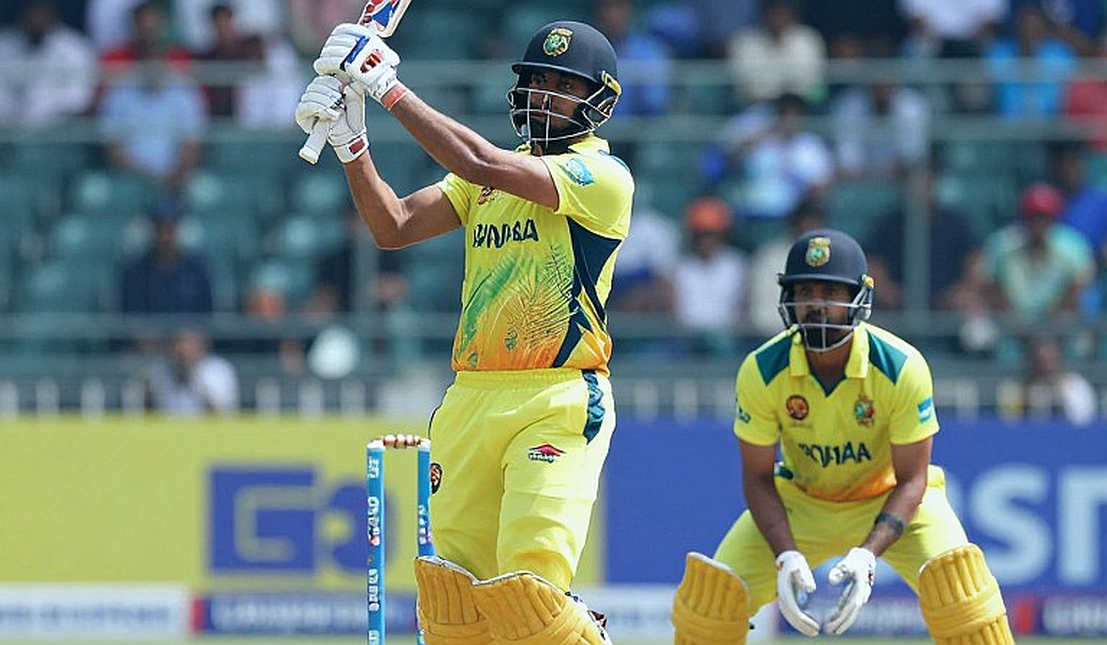
Third, build domestic competitions in associate countries. The only way to lift a country permanently is to have a competition inside it in which more than a hundred players compete at a high level every year. Without that, international success is temporary.
Fourth, treat investment in women's cricket as a market rather than a charity. Where women's cricket has received broadcast exposure, contracts and domestic structure, audiences have followed. Where it has not, the conclusion has been drawn that audiences do not exist, when the real cause was a lack of visibility.
Fifth, make regional tournaments instruments of development, not just competition. If the Asia Cup and similar events open a permanent path for associate teams, their value will far exceed a trophy.
Conclusion
Asian cricket's strength is its diversity, and its weakness is the same. One continent contains the world's richest board and boards that have waited years for a single international ground. One region contains the world's largest franchise league and leagues that run for a few weeks and shut down. That inequality is not itself the problem; the problem is that there is no shared framework for managing it.
The biggest question for Asian cricket over the next decade will not be who has the largest board. It will be whether this continent can build a model in which commercial leagues, national teams, women's cricket, associate nations and player welfare can all survive together. If that model is built, Asia becomes not just a market but the most complete centre of the game. If it is not, we will see the same old story: the game grows, the money grows, but players tire, smaller boards fall behind, and talent keeps flowing across borders.