
होमAsian CricketHong Kong Sixes 2026: Afridi's 31-run over and Niazi's first-ball six help Pakistan beat India by four wickets
Hong Kong Sixes 2026: Afridi's 31-run over and Niazi's first-ball six help Pakistan beat India by four wickets
हांगकांग सिक्सेज 2026 के ग्रुप C मुकाबले में पाकिस्तान ने भारत को चार विकेट से हराया। मिशन रोड ग्राउंड, मोंगकोक में भारत छह ओवर में 88 रन पर ऑल आउट हो गया, जवाब में पाकिस्तान ने 89 रन का लक्ष्य चार विकेट खोकर हासिल किया। मैच का रुख पाकिस्तानी पारी के पहले ओवर में ही तय हो गया, जब अफरीदी ने कृणाल पांड्या के ओवर में 31 रन बटोरे और लगातार पांच छक्के लगाए; दूसरे ओवर में नटराजन की गेंदों पर 28 रन और 12 गेंदों के भीतर टीम ने पचासा पार किया। अफरीदी ने 11 गेंदों पर 40 और नफ़ाय ने 8 गेंदों पर 35 रन बनाए, जबकि नियाज़ी ने अपनी पहली ही गेंद पर छक्का लगाकर मुकाबला समाप्त किया। भारत की ओर से टेवतिया और कृणाल पांड्या पहली गेंद पर आउट हुए और नटराजन नाबाद रहे। ज़रूरी संदर्भ: यह छह खिलाड़ियों और छह ओवर प्रति पारी वाला प्रदर्शनी प्रारूप है, टी20 या वनडे नहीं — इसलिए इन आंकड़ों की तुलना टी20 पैमानों से करना या इससे किसी राष्ट्रीय टीम की ताकत का अनुमान निकालना गलत है।
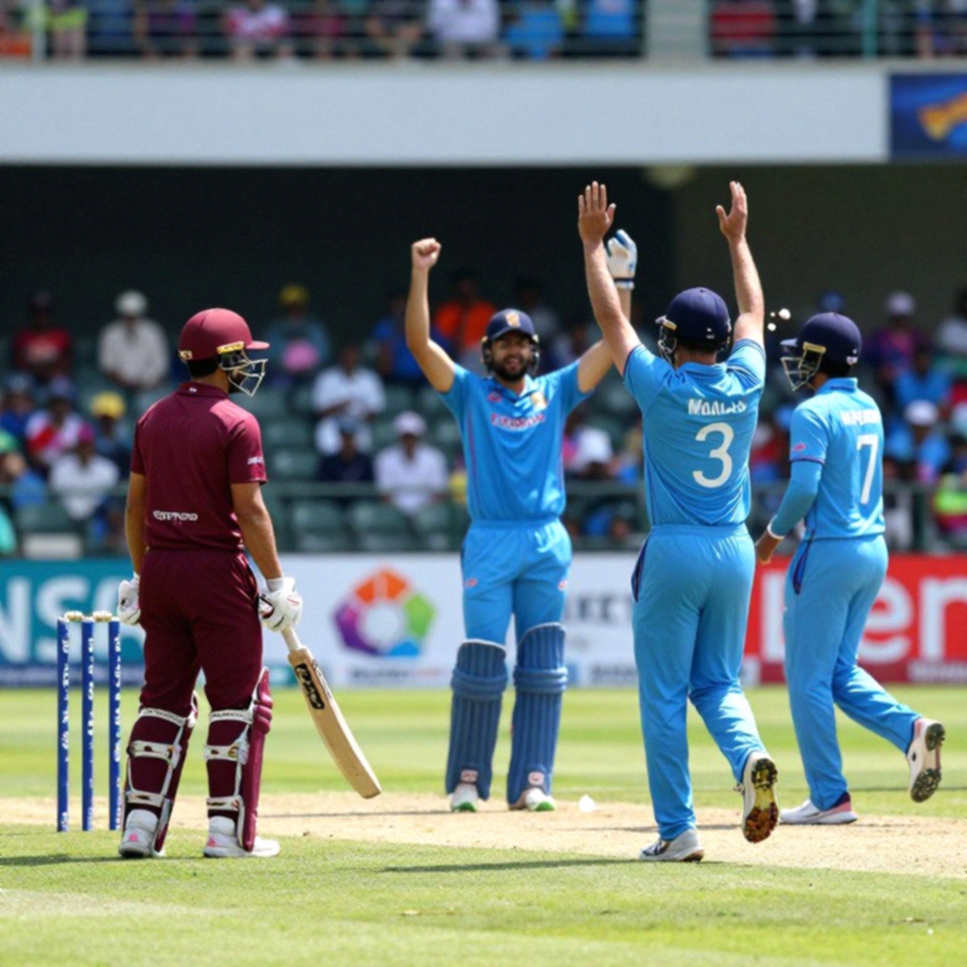
Pakistan beat India by four wickets in a Group C fixture at the Hong Kong Sixes 2026. At the Mission Road Ground in Mong Kok, India batted first and were bowled out for 88 inside their six overs. Pakistan chased down the 89-run target for the loss of four wickets, with Niazi sealing the match by hitting a six off the very first ball he faced.
But before any reading of this match, the most important caveat has to be stated first: this is not a T20 International, not an ODI, and certainly not a Test. The Hong Kong Sixes is an invitation-only exhibition format in which each side fields six players and each innings lasts just six overs. An innings ends once five batters are dismissed. So 88 in six overs, or 40 off 11 balls, or 35 off 8 balls, are neither large nor small by T20 standards — they only carry meaning inside this format.
The simplest way to understand the match is this: in a six-over innings, one over represents 16.7 per cent of a team's bowling resource. When India were defending 88, conceding 31 in a single over meant losing 35 per cent of the target in one-sixth of the innings. Tactically, this was never T20-style phase management — it was a hit-out format where one good over flips the match and one bad over sinks it permanently.
India's innings: 88 all out, on a collapsing base
India's 88 in six overs works out to roughly 14.7 runs per over. In this format that is not an extraordinary or shameful score — on a ground with short boundaries and only six batters, it is a fairly ordinary total that simply was not enough to defend. The real problem was not the score but the shape of the batting order.
The most glaring weakness was that two batters fell to the first ball they faced — Tewatia and Krunal Pandya. In a six-a-side team, that double blow is structural rather than unfortunate, because there is no buffer beneath. The clearest evidence of this was a specialist bowler, Natarajan, finishing unbeaten at the end of the innings: a player not selected for his batting was still at the crease while the batters above him could not be used. That risk exists for every team in a six-player format, but it becomes reality instantly when the top of the order falls apart.
Across both innings there were eleven sixes — a figure that says the surface was batter-friendly and the boundaries short. India's 88 was a total that could only be defended if every bowler controlled his six balls, and there was simply no room for error.
First over: 31 runs and five consecutive sixes
The entire shape of the match was settled in the first over of Pakistan's reply. Afridi took 31 off that over, hitting five sixes in a row. In a six-over format that blow is so heavy that the defending side has neither the time nor the bowling left to come back. An 89-run target became 58 off five overs — 11.6 runs per over. The arithmetic had already become easy.
Notably, that over was bowled by Krunal Pandya, India's most experienced bowler. Experience offers no protection in this format, because there is no long spell behind which a bowler can hide and no room for setting a batter up. One over off-line and the team pays for it across the whole match.
Second over: 28 runs and the fifty up inside 12 balls
The pressure carried into the second over. Pakistan added 28 more and passed fifty inside twelve legal deliveries, meaning 66 per cent of the target was knocked off in two overs. That over was bowled by Natarajan, India's second most experienced seamer. The implication is plain: India's two frontline weapons were neutralised inside the first two overs, and after that there was no defensive plan left to fall back on.
This is not a question of which team is stronger. It is a question of arithmetic. In a six-over game, two overs are a third of your entire bowling allocation. If that third concedes 59, the remaining four overs become irrelevant.
A wobble in the middle, and Niazi's finish
Pakistan's chase was not entirely smooth. Both Afridi and Nafay were dismissed, and the side lost four wickets in all while chasing a small target. That suggests the chase was not as controlled as the final margin implies. Samad faced only three balls and wickets kept falling through the middle.
The result itself, however, was never seriously in doubt, because the 59 runs scored in the first two overs were such a large cushion that the rest of the innings was a formality. The ending matched the beginning — Niazi sealed it with a six off his first ball.
On balls faced, Afridi faced roughly eight, Nafay twelve, Samad three and Niazi one — about 24 legal deliveries in all. Even allowing for wides and no-balls, that points to the chase being completed somewhere around the fourth or fourth-and-a-half over, with roughly two overs to spare. This is a derived estimate rather than something stated in reports, and should be treated as medium confidence.
Result versus process: the four-wicket margin is misleading
The scorebook will say Pakistan won by four wickets, which superficially looks comfortable. But in process terms it was not a controlled chase. Losing four wickets while chasing a modest target, and taking the match all the way to a first-ball six, suggests the team got the result without a commanding performance. The only reason it did not cost them is that the cushion was built so quickly that later mistakes became forgivable.
The venue factor: Mission Road Ground
The match was played at Mission Road Ground in Mong Kok — a small, community-scale ground with short boundaries rather than a full international venue. Short boundaries artificially inflate six-hitting. A significant share of the eleven sixes across both innings is a venue artefact rather than pure batting power, and any conclusion has to account for that or the numbers will mislead.
On conditions, there is no pitch report, weather information, dew detail or Duckworth-Lewis involvement available. That absence should be stated rather than assumed away. Whether it was a day or night match is also not in the available detail.
Four firm analytical conclusions
First, the format produced the scoring pattern, not the teams. 88 in six overs at 14.7 an over, and a chase completed at roughly 22 an over, are only coherent inside a six-a-side, short-boundary context. Reading them against T20 scoring norms is invalid.
Second, the match was lost and won inside a single six-ball window. Krunal Pandya's opening over converted a defendable 88 into a near-impossible defence. In a six-over innings, one over is 16.7 per cent of the bowling resource and 31 runs is 35 per cent of the target. That ratio is the whole story.
Third, India's collapse was structural, not merely a run-rate issue. First-ball ducks for Tewatia and Krunal Pandya, plus Natarajan unbeaten at the end, together show the innings had no lower-order buffer — an inherent risk when only six batters are available.
Fourth, result and process must be read separately. The four-wicket margin flatters Pakistan's control.
The biggest risk: format-mixing
The single largest analytical hazard with this data is judging it on T20 scales. Treating a 40 off 11 balls as proof of a player's T20I pedigree, or a 31-run over as proof that a bowler is internationally weak, are both errors. Equally, using this result to infer the strength of a national team is invalid. The format is different, the bowling constraints are different, the risk calculus is different.
In other words, this match can tell you how a player performed under six-over pressure on a given night. It cannot tell you what that player is in the longer formats.
Takeaways for India
The main lesson is that batting depth is the most valuable resource in a six-player team. Losing two wickets to the first ball means there is no one left to hold the innings together. In this format, 88 is only defensible if every bowler controls his six balls; one loose over sinks the whole match.
The second lesson concerns bowling plans. When your two most experienced bowlers concede 59 in the first two overs, the question is not about experience but about how risk is distributed in this format. Whether the most experienced bowler should take the hardest over, or whether risk should be spread, is a team-management call this match has left open.
Takeaways for Pakistan
The good news is that Afridi and Nafay effectively ended the contest inside two overs. Afridi's 40 off 11 and Nafay's 35 off 8 had cut an 89-run target roughly in half inside twelve balls.
The concern is that Pakistan lost four wickets and needed a first-ball six to finish. That points to instability in the middle order. Against a bigger target, that looseness could be expensive. Samad facing only three balls suggests roles in the batting order are not yet settled.
Group C context
The framing of the win as a "bounce back" and as keeping "hopes of progressing alive" strongly suggests Pakistan had lost their opening Group C fixture. That inference comes from the language rather than an explicit statement, and should be treated as an inference only. If correct, this win is not just two points but the basis for staying alive in the tournament.
For India, the defeat adds pressure in a format where every point is heavy and chances to correct course are limited.
Player focus
Afridi is the headline act — not only for the 40 runs but because he changed the shape of the match in the first over. Five consecutive sixes in a six-over game is close to a decisive event. Nafay's 35 made him the second pillar. Niazi's contribution is a single ball, but it was the ball that finished the match. Samad had only three balls to face, which suggests his role remains unclear.
For India, Tewatia and Krunal Pandya both fell first ball — the cruelty of a format where one delivery can wipe out a batter's entire utility. For Krunal it was a double blow, since his first over also went for 31. Natarajan conceded 28 in the second over and finished unbeaten, a statistic that on its own explains why India's innings had no lower-order structure.
What it all means
This was a memorable match, but not because it revealed the true strength of either side. It was memorable because it showed that in six-over cricket, one over is everything. A total of 88, a 31-run opening over, five consecutive sixes, two first-ball ducks and a first-ball winning six all point the same way: in this format, decisions are made in tiny windows and their consequences last the whole match.
For anyone hoping to convert this result into a broader conclusion about T20 cricket, the necessary warning is simple — the format is different, the scale is different, and the conclusions have to be too.
The numbers in brief
India: 88 in six overs, all out. Pakistan: 89 chased with four wickets down. Decisive over: the first, 31 runs, five consecutive sixes. Second over: 28 runs, fifty up inside 12 balls. Eleven sixes across both innings. Venue: Mission Road Ground, Mong Kok, Hong Kong. Format: six-a-side, six overs per innings, exhibition.

संबंधित खिलाड़ी
अनुशंसित
IND vs NZ 4th T20I: 172/9 vs 259/7 — The Death-Bowling Truth Buried Inside India's 87-Run Defeat2026-10-30
Matt Henry Out of the T20Is: New Zealand's Real Statement Isn't in the Scoreline, It's in the Selection Sheet2026-10-25
A 35-Ball Hundred, 199 in 80 Balls: What Wellington Recorded, and What the Scorecard Left Out2026-10-28
The Discipline of the Empty Cell: Why Incomplete Data Should Stop a Cricket Analysis2026-10-22